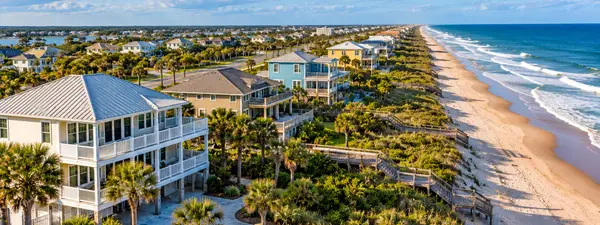
Satellite Beach Home Buyer's Guide: A to Z
Buying on the Space Coast requires more than choosing a home near the water. A sound purchase budget accounts for financing, property taxes, insurance, maintenance, association obligations, and the condition of the specific property. This Space Coast Home Buyer's Guide explains how to assess those costs, prepare to compete, compare locations, and move from search to closing with a clear plan. For coastal homes, the strongest decision is usually the one that balances lifestyle priorities with documented systems, realistic monthly costs, and an offer strategy suited to the individual listing.
Space Coast Real Estate: The Big Picture
The Space Coast is a mature coastal city in Brevard County where property-specific details can matter more than a single citywide statistic. Buyers should compare each home's location, condition, major-system history, insurance profile, association requirements, and seller terms.
The local housing stock includes many established homes, a large share of them built in the 1960s, so renovation permits, roof documentation, wind-mitigation features, drainage, electrical updates, plumbing history, and HVAC age deserve early attention. Coastal proximity can also create meaningful differences in insurance pricing and maintenance expectations between otherwise similar homes.
What the Space Coast Home Buying Market Looks Like Right Now
Space Coast home buying conditions are best viewed listing by listing, with buyer leverage depending on condition, price point, location, and the home's ongoing ownership costs. Well-maintained properties with current major systems, documented improvements, and practical coastal features can attract serious interest. Homes with deferred maintenance, aging roofs, unclear renovation history, elevated insurance costs, or restrictive association terms may offer more room for negotiation.
Financing is the other major factor this fall. The average 30-year fixed mortgage rate was 7.40% as of October 15, 2026, compared with 6.27% a year earlier, according to Freddie Mac's weekly survey. Higher rates reduce how much house a given monthly payment covers, which is why getting real lender numbers early matters more than ever.
The current market does not reward a one-size-fits-all approach. A buyer evaluating a renovated home should look beyond finishes to the building envelope, permits, drainage, windows, doors, HVAC, electrical components, and roof history. Those details can influence insurance options, maintenance planning, and the strength of a future resale position.
Space Coast Home Buyer's Guide research should also distinguish between an attractive asking price and a manageable long-term ownership cost. A lower-priced home can require a larger reserve if major systems are approaching replacement, while a higher-priced home with documented improvements may offer greater predictability.
For local context, the Satellite Beach community overview outlines the city's housing profile. Buyers should still compare active listings with recently closed homes, evaluate seller motivation, and confirm carrying costs before deciding how aggressively to offer.
Is the Space Coast a Buyer's or Seller's Market Right Now?
The Space Coast gives prepared buyers opportunities to negotiate selectively, especially when a property needs updates, has remained available longer, or carries higher ownership costs.
- Inventory conditions can vary sharply by property type, location, condition, and price range.
- Homes with current roofs, documented maintenance, updated systems, and desirable coastal or canal access may receive faster attention.
- Listings with deferred maintenance, insurance concerns, or association restrictions often require more careful pricing and terms analysis.
- Buyers entering today should be ready to act on a strong fit while keeping their offer aligned with the home's condition and total monthly cost.
Step 1: Set a Realistic Budget Before You Search
A realistic Space Coast budget starts with a monthly payment that remains comfortable after financing, property taxes, insurance, maintenance, utilities, and any association dues. As a nonbinding rule of thumb, some financial advisers use a housing-cost range of roughly 25% to 28% of gross monthly income, but buyers should confirm affordability through lender scenarios and their own cash-flow plan. A mortgage payment calculator is a quick way to see how price, down payment, and rate interact before you talk to a lender.
Pre-qualification is an early estimate based largely on information supplied by the borrower. Genuine affordability is more demanding because it considers available cash, recurring debts, down payment, reserves, insurance quotes, expected maintenance, and the payment level that still supports your larger financial goals.
Property taxes should be reviewed for the individual home rather than estimated from the asking price alone. Florida tax bills reflect taxable value, exemptions, and multiple local taxing authorities. Keep in mind that a seller's current tax bill may reflect years of homestead protection under Save Our Homes, which limits annual assessment increases on a homestead to the lesser of inflation or 3%. After a sale, the assessed value generally resets to market value, so your bill may be noticeably higher than the seller's.
Property tax rules may also change soon. Amendment 3 on the November 3, 2026 ballot would raise the homestead exemption for non-school taxes to $150,000 in 2027 and $250,000 in 2028, add new residency requirements, and lower the annual assessment cap on non-homestead property from 10% to 5%. It needs at least 60% voter approval to pass. Ask your agent and lender to model taxes under the current rules and revisit them after the election.
Insurance deserves equal attention on the Space Coast. Roof age, opening protection, deductibles, flood exposure, construction details, and the home's precise location can materially affect the monthly payment. Early budgeting should include lender-provided payment scenarios and property-specific insurance quotes before a buyer settles on a search range.
Step 2: Get Pre-Approved Before You Search on the Space Coast
Pre-approval helps Space Coast buyers present a more credible offer because it shows that a lender has reviewed financial documentation rather than only discussed a preliminary borrowing estimate. In a market where a well-maintained coastal home can draw prompt attention, preparation allows the buyer to focus on the property and contract terms without first assembling a financing file.
Pre-qualification is generally an initial estimate based on borrower-provided information. Pre-approval typically involves a closer review of income, assets, debts, credit, and supporting documents. The Consumer Financial Protection Bureau explains that a mortgage pre-approval letter reflects a lender's tentative willingness to lend, not a final loan commitment.
Gather recent income records, bank statements, identification, documents for large deposits, tax returns when applicable, and records of recurring obligations. Relocating buyers may also need documentation related to a job transfer, remote employment, or an upcoming start date. Keep those materials current throughout the search.
Step 3: Choose the Right Area of the Space Coast for Your Lifestyle and Budget
The Space Coast offers several residential settings, and the right choice depends on lifestyle, maintenance tolerance, intended use, and total ownership costs. Buyers should compare location, lot characteristics, building age, association structure, and the condition of major systems rather than treating the city as one uniform market.
Ocean-oriented residential streets can suit buyers who prioritize beach access, outdoor living, and a coastal setting. These homes often appeal to relocation and second-home buyers. The tradeoff is a more detailed review of wind features, drainage, roof condition, insurance requirements, and salt-air maintenance.
Canal-front neighborhoods on the west side of the city, with navigable access to the Banana River, can suit boaters and paddlers. Dock condition, seawall age, and water depth should be checked for each property.
Established interior neighborhoods can appeal to buyers who want residential streets and practical access to daily services while remaining close to the shoreline. Many properties reflect the area's mature housing stock, making renovation quality, permits, electrical updates, plumbing history, and HVAC age important comparison points.
Condominium and townhome communities can work well for buyers seeking a lock-and-leave lifestyle with less direct responsibility for exterior maintenance. Buyers should request association documents early and review dues, reserve funding, rental rules, building maintenance obligations, insurance responsibilities, and potential assessments.
Larger updated homes and water-adjacent properties may suit move-up buyers looking for entertaining space, renovated interiors, storage, or a stronger connection to outdoor amenities. School research may also inform a household's search. Brevard Public Schools earned its third consecutive districtwide "A" from the state in 2026, and Satellite High School earned an "A" in the 2026 state grades. Buyers should still confirm the assigned schools for each address and evaluate programs, transportation, and practical fit rather than drawing broad conclusions from a single grade. Families relocating from out of state may also find this guide to moving to the Space Coast helpful.
Step 4: Search Strategically and Evaluate Properties
An effective Space Coast property search begins with criteria tied to your true monthly budget and intended use, not just bedroom count or listing photos. Set alerts for the home type, location, price range, and must-have features that fit your plan. Review new options promptly while maintaining clear walk-away criteria.
At a first showing, focus on components that are costly or difficult to change:
- Roof age, visible condition, and maintenance documentation
- Windows, doors, drainage, and wind-mitigation features
- Electrical, plumbing, HVAC, and water-heater update history
- Signs of moisture, exterior wear, or deferred maintenance
- Dock, seawall, and water depth for canal-front homes
- Association rules, reserve planning, assessments, and rental restrictions
- Layout, storage, parking, and everyday functionality
The Space Coast's established homes often require buyers to look beyond cosmetic improvements. A renovated kitchen can be appealing, but the building envelope, major systems, permits, and maintenance history may have a greater influence on long-term planning. Current Space Coast listings provide a useful reference point while comparing available homes with recent sales and expected carrying costs.
Step 5: Make a Competitive Offer on the Space Coast
A strong Space Coast offer is financially credible, responsive to the seller's priorities, and grounded in the property's condition and long-term costs. Price matters, but a complete financing file, a workable closing timeline, and carefully chosen contract terms can also shape how an offer is received.
Before setting terms, compare the home with nearby closed sales and account for insurance, taxes, association obligations, repairs, and likely maintenance. Earnest money, financing terms, closing dates, and buyer protections are negotiated items. They should reflect your financial position and risk tolerance rather than copy another transaction.
An escalation clause can be useful when documented competition exists, provided it states a clear maximum price and verification process. Other negotiating levers may include accommodating a seller's preferred closing date, presenting a complete lender file, or limiting repair requests to material concerns identified during due diligence. With rates above 7%, asking for a seller credit toward a rate buydown can sometimes lower your monthly payment more than a comparable price reduction, so ask your lender to compare both.
The goal is not simply to secure a contract. It is to buy a home on terms that remain manageable after closing, including the recurring expenses and maintenance planning that come with coastal ownership.
Tip: Do not base an offer only on the asking price. Compare condition, insurance implications, and likely near-term maintenance before deciding how aggressively to bid.
Step 6: Inspections, Due Diligence, and Closing on the Space Coast
The period between an accepted offer and closing is when Space Coast buyers verify the property, complete financing, review title work, and prepare funds for settlement. The signed contract establishes deadlines for deposits, lender milestones, buyer rights, and closing.
For an established coastal home, buyers commonly consider a general property inspection along with more focused evaluations when the property warrants them. Roof condition, moisture, electrical systems, HVAC performance, plumbing, wood-destroying organisms, drainage, and wind-related features can all affect future planning. The appropriate scope depends on the home's age, visible condition, available records, and the buyer's intended use. Florida sellers must also provide a flood disclosure at or before contract signing, which is a useful starting point for questions about past water events and insurance claims.
Title and escrow work confirm ownership, identify recorded matters affecting the property, coordinate documents, and prepare settlement funds. Review the loan estimate and closing disclosure closely because they outline loan terms, cash needed to close, and itemized charges.
As a general planning range, many buyers set aside roughly 3% to 5% of the purchase price for closing costs. Actual buyer costs vary by loan program, prepaid items, title charges, insurance requirements, and negotiated concessions.
After closing, owners who will live in the home as a primary residence should apply for the homestead exemption with the Brevard County Property Appraiser by March 1 of the following year.
New Construction vs. Resale Homes on the Space Coast
New construction generally offers newer systems and warranty coverage, while resale homes can provide more established location choices and condition-based negotiation opportunities.
| Consideration | New Construction | Resale Home |
|---|---|---|
| Price positioning | May reflect builder pricing, selected finishes, and included features | Varies by location, condition, updates, and seller motivation |
| Negotiability | May focus on financing incentives, upgrades, or closing-cost contributions | May focus on price, timing, repairs, or contract terms |
| Property review | Review plans, specifications, completion standards, and warranties | Review maintenance records, permits, upgrades, and system ages |
| Customization | Options may be available before construction milestones | Changes are generally completed after purchase |
| Move-in timeline | Depends on construction progress and final completion | Can align with a negotiated closing date |
| Warranty coverage | Builder and manufacturer warranties may apply | Depends on transferable coverage and contract terms |
| Financing | May include builder-affiliated financing options | Buyers can compare financing options independently |
Ready to Buy on the Space Coast?
Laura Myers, REALTOR® Advisor with Engel & Völkers Melbourne, works with buyers across the Space Coast and Brevard County's coastal communities, from relocation buyers comparing coastal ownership costs to waterfront, second-home, and move-up households evaluating condition, timing, and offer terms. For a no-pressure conversation about your budget, preferred property type, and next steps, call or text (321) 429-2367, email laura.myers@engelvoelkers.com, or get in touch with Laura.
Frequently Asked Questions: Buying a Home on the Space Coast
How much do I need for a down payment to buy on the Space Coast?
The required down payment depends on the loan program, borrower qualifications, and the property type, so there is no single Space Coast amount. Plan for the down payment plus closing expenses, prepaid insurance and taxes, and a reserve for property-specific costs.
How long does it take to buy a home on the Space Coast from search to close?
The search period can range from a few weeks to several months depending on inventory, budget, and buyer criteria. Once a contract is accepted, the closing schedule is set by the negotiated agreement, lender requirements, and title work.
Is the Space Coast a good place to buy a home right now?
The Space Coast can be a strong fit for buyers whose budget, lifestyle priorities, and maintenance expectations align with the property they choose. The best opportunities often come from comparing condition, insurance implications, seller terms, and total monthly costs rather than relying on a broad market label.
What are closing costs for buyers on the Space Coast?
Many buyers plan for roughly 3% to 5% of the purchase price in closing costs. Final buyer costs depend on financing, title services, prepaid items, insurance, and any negotiated seller concessions.
Will my property taxes be the same as the seller's?
Usually not. A seller with a long-held homestead may benefit from years of capped assessment increases, and the assessed value generally resets after a sale. Florida voters will also decide Amendment 3 on November 3, 2026, which could change homestead exemptions and non-homestead caps starting in 2027.
Do I need a buyer's agent on the Space Coast, and what does it cost?
A buyer's agent can help evaluate homes, prepare offers, coordinate contract deadlines, and compare local ownership considerations. Compensation should be discussed and documented in a written buyer agreement before representation begins, with the final arrangement determined by the negotiated agreement.
Categories
Recent Posts